Tree Trimming
Expert Tree Trimming Pittsburgh – Keep Your Trees Healthy & Beautiful
ISA Certified Arborists.
All Tree Species & Sizes.
Residential & Commercial.
Free Estimates.
Professional tree trimming is the single most impactful ongoing service you can invest in for your Pittsburgh property. Done correctly and at the right time of year, expert pruning makes your trees structurally stronger, extends their lifespan, reduces your risk of storm damage, and enhances the curb appeal and value of your home or business. Done poorly — or not at all — overgrown, unmanaged trees become liabilities.
We are a locally owned and ISA Certified tree trimming Pittsburgh service, serving homeowners and commercial property managers throughout the Greater Pittsburgh area. Our certified arborists apply species-specific trimming and pruning techniques to every tree on every job — not a one-size-fits-all approach, but a considered assessment of what each individual tree actually needs.
Tree Trimming vs Tree Pruning — What Is the Difference?
Pittsburgh homeowners often use "tree trimming" and "tree pruning" interchangeably, and while both involve removing parts of a tree, they serve different primary purposes — and understanding the distinction helps you communicate exactly what your trees need.
Trimming
Tree trimming focuses primarily on controlling the size, shape, and appearance of a tree. Trimming keeps canopies within their intended boundaries, removes overgrowth that interferes with structures or sight lines, and maintains the aesthetic form of ornamental and landscape trees. It is largely driven by how the tree looks and how it fits within its space.
Pruning
Tree pruning is a broader term for the strategic removal of specific branches to improve the tree's structure, health, and safety. Pruning encompasses dead branch removal, disease management, structural correction, hazard mitigation, and long-term canopy development. It is driven by what the tree needs biologically and structurally, rather than purely by appearance.
In practice, professional tree care almost always combines both. When our certified arborists trim a tree, they are simultaneously assessing and addressing structural issues — and vice versa. What matters most is that the work is done by a trained professional who understands tree biology, not simply someone with a chainsaw and a ladder.
The Real Value of Professional Tree Trimming for Homeowners
Every trimming and pruning job we perform follows ANSI A300 pruning standards. Most homeowners think about tree trimming when a branch is already hanging over the roof or touching a power line. But as a trusted Pittsburgh tree trimming provider, we know the greatest value of regular professional pruning comes before problems develop — not after.
Tree health and disease prevention. Dead, dying, and diseased branches are the first place tree disease spreads. Fungal infections, wood-boring beetle infestations, and bacterial pathogens enter trees through wounds and weak wood. Removing dead branches and diseased limbs during a routine trim eliminates the entry points and slows the spread of infection to healthy parts of the tree and to neighboring trees on your property. Our certified arborists identify early signs of tree disease — discoloration, cankers, fungal growth, abnormal bark patterns — that untrained eyes miss entirely.
Structural strength and storm resilience. Pittsburgh's springs bring severe thunderstorm systems, and our winters deliver heavy ice and snow loads that test every limb in your yard. Trees with crossed branches, co-dominant stems, dense unbalanced canopies, and excessive weight in the upper crown are far more likely to suffer catastrophic limb failure under these conditions. Regular crown thinning and corrective pruning redistributes weight, opens the canopy to wind flow, and removes the weak wood most likely to fail. A well-trimmed tree is genuinely more storm-resistant than one left to grow without guidance.
Property value and curb appeal. Mature, healthy, well-shaped trees are among the most valuable features on any Pittsburgh residential or commercial property. Studies consistently show that quality trees add 10–20% to residential property values — but only when they are properly maintained and structurally sound. An overgrown, poorly shaped tree detracts from curb appeal and can become a liability rather than an asset. Annual or biennial tree trimming keeps your canopy looking intentional, professionally managed, and appealing to buyers, tenants, and neighbors alike.
Hazard prevention before it becomes an emergency. A dead branch hanging over your roof, driveway, or playground is an emergency waiting to happen. Every season we see fallen trees and dropped limbs that could have been prevented with routine tree trimming service. Removing dead branches and identifying structural defects through regular tree care is always less expensive than emergency tree removal, roof repairs, vehicle damage, or injury claims.
Tree Trimming Pittsburgh Services for Healthy Trees
Crown Cleaning & Dead Branch Removal
Crown cleaning is the foundation of all professional tree trimming. It involves the selective removal of dead, dying, diseased, crossing, and weakly attached branches throughout the canopy. For Pittsburgh's urban trees — oaks, maples, ash, sycamore, and ornamental species growing in close proximity to homes and structures — crown cleaning is the most critical pruning service for both tree health and property safety. We remove dead branches before they fall, eliminate disease pathways, and open the canopy to improve airflow and sunlight penetration to the interior of the tree.
Crown Thinning
Crown thinning reduces the density of the canopy without changing its overall shape or size. By selectively removing interior branches and foliage, thinning allows wind to pass through the canopy rather than pushing against it — significantly reducing the force exerted on the root system and main trunk during Pittsburgh's strong storm events. Thinning also improves light penetration to the lawn and landscaping below the tree. Our arborists thin to a specific canopy density rather than over-thinning, which can stress the tree and cause excessive response growth.
Crown Reduction & Canopy Shaping
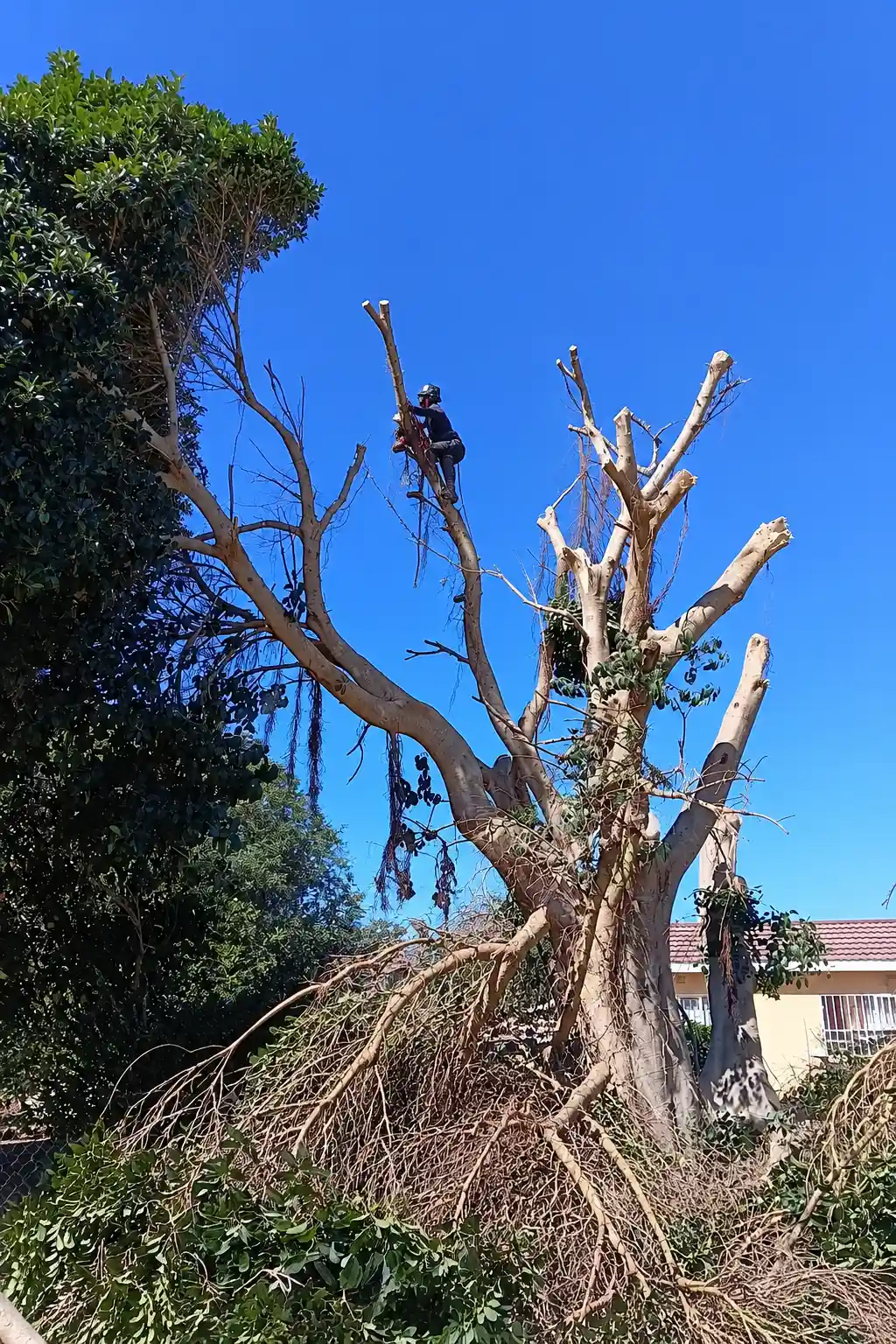
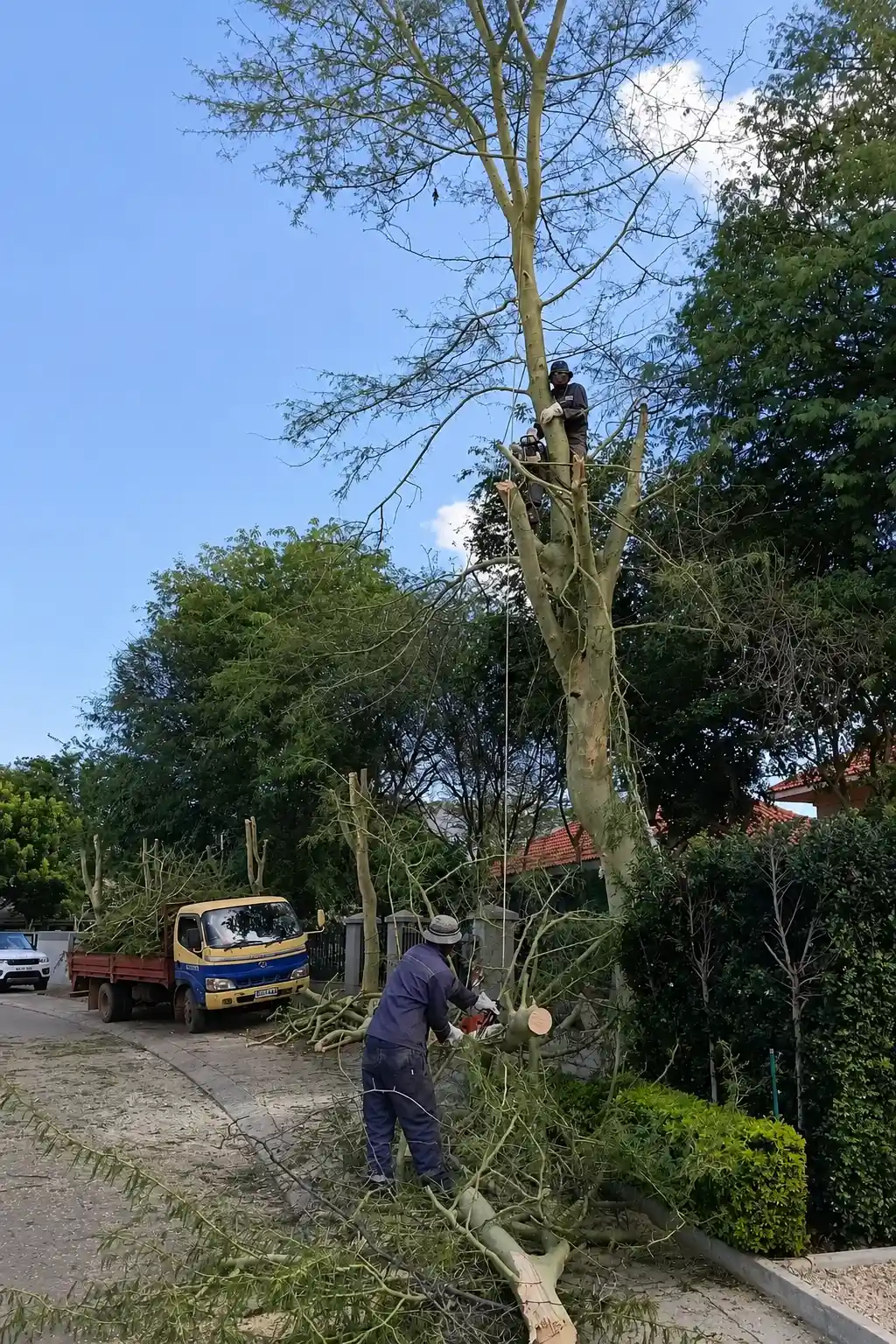
Crown reduction decreases the overall height and spread of a tree by cutting back to lateral branches capable of sustaining the remaining canopy. This technique is used when a tree has outgrown its space, is encroaching on structures, or poses a risk due to excessive height and canopy weight. Crown reduction is fundamentally different from topping — a destructive practice that leaves large, flat cuts and creates future hazard wood. Our certified arborists use proper reduction cuts that maintain the tree's structural integrity and natural form throughout the process.
Directional Pruning & Utility Line Clearance
Trees growing near power lines, structures, fences, and neighboring properties require ongoing directional pruning to keep growth away from conflict zones. In Pittsburgh's older residential neighborhoods — Squirrel Hill, Bethel Park, Brookline, East Pittsburgh, and throughout Allegheny County — mature trees planted decades ago frequently conflict with utility lines and rooflines as they have grown. Our directional pruning service guides future growth away from these zones while preserving as much of the tree's natural form and health as possible.
Residential Tree Trimming Pittsburgh
Our residential tree trimming service covers every tree species and every size on your property — from young ornamental trees that need early structural training to towering mature oaks and maples that require bucket truck access and careful rigging. Every residential trimming job is assessed by an ISA Certified Arborist who evaluates the species, growth pattern, and structural condition of each tree before any cuts are made. Residential tree trimming is available as a one-time service or as part of an annual tree care maintenance schedule for Pittsburgh homeowners who want to stay ahead of issues proactively.
Commercial Tree Trimming Pittsburgh
Pittsburgh businesses, HOAs, municipalities, and commercial property managers count on us for reliable, scheduled commercial tree trimming and pruning. We maintain tree canopies along commercial corridors, perform seasonal pruning on landscaped grounds, clear overgrowth from parking lots and building perimeters, and manage liability-driven trimming on high-traffic properties. Our commercial crews are fully insured, work efficiently around business operations, and provide the documentation required for commercial contracts and municipal compliance across the Pittsburgh area.
When Is the Best Time to Trim Trees in Pittsburgh, PA?
Timing matters enormously in tree trimming. Pittsburgh's four-season climate creates distinct windows that are better or worse for different species, and pruning at the wrong time can stress a tree, invite disease, or trigger poor wound closure.
Late winter to early spring is the optimal window for most Pittsburgh tree species. Pruning during late dormancy — typically February through mid-March in Western Pennsylvania — allows trees to heal quickly once growth resumes, reduces the window for disease and pest entry into fresh cuts, and gives arborists an unobstructed view of the branch structure without foliage. Most oaks, maples, ash trees, sycamores, and ornamental trees respond best to late winter pruning.
Oak trees require special care around timing. Oak Wilt is a devastating fungal disease spread by sap beetles that are most active in spring and early summer in Pennsylvania. To protect oaks on your Pittsburgh property, trimming and pruning should be completed before April or deferred until after the beetle flight period in late summer. If an oak suffers storm damage or requires emergency pruning during the high-risk window, wound dressings and prompt treatment are essential. Our certified arborists are trained in Oak Wilt prevention protocols specific to the Pittsburgh region.
Dead branches should be removed immediately, regardless of season. Unlike structural pruning or canopy shaping — which benefit from seasonal timing — dead, hanging, and hazardous branches should come down as soon as they are identified. A dead branch over your home or driveway in Allison Park or Cranberry Township is a hazard in July just as much as it is in February. Do not wait for the right season to address a safety issue.
Summer trimming for light management. Light pruning of foliage-heavy deciduous trees after spring growth has hardened off — typically June through July — can be performed to improve sunlight penetration and reduce canopy weight before storm season peaks. This is also a practical time for fruit tree pruning to shape growth and improve the following season's yield.
Fall is generally the least optimal time for major trimming of most deciduous species in Pittsburgh. Trees are still moving nutrients from leaves back into the root system, and fresh pruning cuts heal slowly as temperatures drop. Save significant structural pruning for late winter and leave fall for light maintenance, debris removal, and assessment appointments.
Serving Pittsburgh, PA | Allegheny County & Greater Pittsburgh
We provide professional tree trimming and pruning services throughout the Pittsburgh area, including:
Pittsburgh neighborhoods: Squirrel Hill, Shadyside, Brookline, East Pittsburgh, Mt. Washington, Lawrenceville, Greenfield, Oakland, Highland Park, Beechview, South Side, Hazelwood, and East Liberty.
South Hills: Bethel Park, Mt. Lebanon, Upper St. Clair, Baldwin, Castle Shannon, Dormont, Greentree, South Fayette Township, Nevillewood, and Pleasant Hills.
North Hills & North Pittsburgh: Allison Park, Cranberry Township, McCandless Township, Ross Township, West View, Avalon, Gibsonia, Glenshaw, Wexford, and Mars.
West Pittsburgh: Carnegie, Bridgeville, Scott Township, Collier Township, Moon Township, Coraopolis, Sewickley, McKees Rocks, Penn Hills, and Wilkinsburg.
We serve all of Allegheny County and extend into Butler, Washington, Beaver, and Westmoreland counties. Contact us to confirm service to your specific location.
Frequently Asked Questions — Tree Trimming Pittsburgh, PA
How much does tree trimming cost in Pittsburgh, PA?
Tree trimming cost in Pittsburgh depends on tree size, species, number of trees, access conditions, and how much work the canopy needs. Small ornamental trees typically cost $150–$350 to trim. Mid-size trees run $350–$750. Large mature trees — oaks, maples, and sycamores common throughout Pittsburgh's older neighborhoods — generally cost $750–$1,500 or more depending on canopy complexity and equipment needed. We provide free, written estimates for every trimming job before any work begins.
How often should I have my trees trimmed in Pittsburgh?
Most residential trees benefit from a professional trimming assessment every one to three years depending on species, growth rate, age, and proximity to structures. Fast-growing species like silver maples and Bradford pears may need attention annually. Slower-growing hardwoods like oaks may go two to three years between structural pruning sessions. Your certified arborist can recommend a schedule tailored to the specific trees on your property after an initial assessment.
Is tree trimming the same as tree topping? What is tree topping?
No — tree trimming and tree topping are completely different, and topping is a practice our certified arborists will not perform. Topping involves cutting branches back to large stubs regardless of tree structure, leaving massive wounds that cannot close properly, creating abundant hazard wood, and triggering weak, fast-growing water sprout growth. It is universally condemned by the International Society of Arboriculture and causes long-term structural damage. Professional tree trimming uses proper reduction cuts to lateral branches that can sustain the canopy — preserving the tree's health, structure, and appearance.
Can you trim a tree without removing it? What if I just want to reduce its size?
Yes — crown reduction is specifically designed to reduce the overall size of a tree without removing it. We cut back to lateral branches capable of sustaining the remaining canopy, which reduces height and spread while maintaining the tree's natural shape and structural integrity. Crown reduction is the correct alternative to topping, and it is the approach we use whenever a tree has grown too large for its site. Our certified arborists will assess whether crown reduction is the right fit for your specific tree or whether other approaches better serve the tree's long-term health.
Do you offer tree trimming as a standalone service, or only combined with removal?
Tree trimming and pruning is fully available as a standalone residential or commercial tree service. Not every tree needs to come down — many trees in Pittsburgh simply need professional trimming and ongoing tree care to stay healthy, safe, and beautiful for decades. We offer one-time trimming visits as well as scheduled annual tree care programs for homeowners who want consistent professional oversight of their landscape.
Get a Free Tree Trimming Estimate in Pittsburgh Today
Ready to give your trees the professional care they deserve? Whether you need a full-property trimming assessment, a single hazardous dead branch removed, directional pruning near power lines, or a scheduled annual tree care program for your Pittsburgh home or business — our certified arborist team is ready to help.
We deliver expert tree trimming and professional tree care services across all of Pittsburgh, PA, Allegheny County, and Greater Pittsburgh — with ISA Certified Arborists on every job, free written estimates, and complete cleanup included.
Call (412) 501-2233 — Free Estimates, Fast Scheduling
Licensed, Bonded & Insured
ISA Certified Arborists
Pittsburgh, PA | Allegheny County | Greater Pittsburgh | Western Pennsylvania
Fast Response — We Reply in Under 2 Hours
Get Your Free Estimate Today
Your information is 100% safe and never shared.