Tree Pruning
Tree Pruning Pittsburgh: Certified Arborists You Can Trust
ISA Certified Arborists.
Science-Based Pruning Techniques.
Tree Preservation First.
Free Estimates.
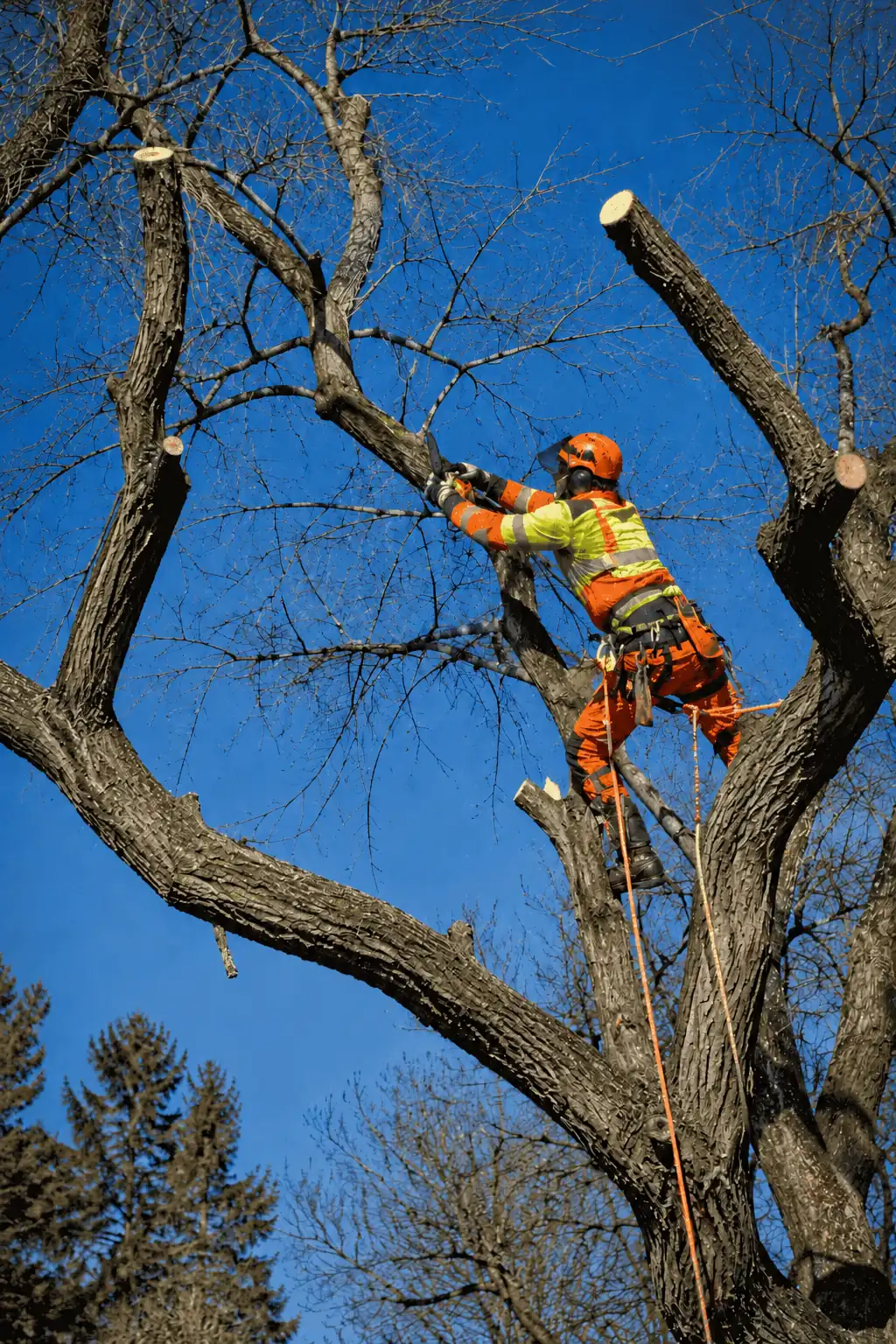
Tree pruning is not simply cutting branches — it is the practice of arboriculture applied to a living organism that will respond biologically to every cut made. Done with knowledge and intention by an ISA Certified Arborist, professional pruning extends the life of your trees, eliminates structural hazards before they become emergencies, controls the spread of disease and pests, and preserves the trees worth saving on your Pittsburgh property. Done without that knowledge, it does the opposite. Our arborists follow ANSI A300 pruning standards on every job.
We are a locally owned tree care company serving Pittsburgh, PA and the Greater Pittsburgh area, led by ISA Certified Arborists who treat every pruning job as a clinical assessment — not a production run. Our Tree Pruning Pittsburgh services are built around tree preservation first, with removal as the last resort, not the default. From Squirrel Hill and Bethel Park to Allison Park and Cranberry Township, we help Pittsburgh homeowners and commercial properties maintain the trees that define their landscapes for decades to come.
What Professional Tree Pruning Actually Does for Your Trees
Most homeowners associate pruning with appearance. The real work happens at the biological level — and understanding what properly executed pruning does to a tree explains why the quality of the person holding the saw matters enormously.
Trees seal wounds, they do not heal them. Unlike human skin that regenerates, a tree cannot repair damaged tissue. Instead it grows new wood around pruning wounds, sealing them off from decay through a process called compartmentalization. The speed and completeness of this response depends entirely on where and how the pruning cut is made. A cut in the right location — just outside the branch collar, at the correct angle — allows the tree to compartmentalize quickly and effectively. A cut in the wrong place, or a large flush cut that removes the branch collar entirely, leaves an open wound the tree may never fully seal, creating a permanent entry point for decay fungi and wood-boring insects.
This is why professional tree pruning by an ISA Certified Arborist produces fundamentally different outcomes than non-professional tree cutting — and why the difference is not visible on the day of the work but becomes obvious over the following years.
Disease prevention through targeted branch removal. Diseased and infested branches are the primary pathway through which tree diseases and pest populations spread within a tree and from tree to tree. Pittsburgh's urban forest faces ongoing pressure from several serious pest and disease threats — including Bagworms, which defoliate ornamentals and evergreens; Hemlock Woolly Adelgid, which targets Eastern hemlock across Western Pennsylvania; and various fungal pathogens that exploit stressed or wounded wood. Our certified arborists identify and remove affected branches at the right point in the infection cycle, before the problem moves to the main stem or adjacent trees. This targeted approach saves trees that reactive or untrained pruning would lose.
Improved airflow, light penetration, and long-term vigor. Dense, unmanaged canopies restrict airflow and trap moisture within the interior of the tree — creating ideal conditions for fungal growth and foliar diseases. Properly thinned canopies allow air to move freely, dry leaf surfaces faster after rain, and let sunlight reach the interior and the ground below. The result is a healthier individual tree and a healthier root zone beneath it. This matters especially in Pittsburgh's urban neighborhoods, where trees planted in lawns and gardens have limited soil volume and experience significant environmental stress year-round.
Structural integrity and storm damage prevention. Every structural defect in a tree — a co-dominant stem, a weak branch union, a heavy overextended limb — represents a potential failure point under the loading conditions of a Pittsburgh ice storm or summer thunderstorm. Corrective pruning removes these defects early, before they grow to a scale where failure causes serious property damage. Our arborists evaluate the full structure of each tree during every pruning visit, not just the obvious problem branches, because the next failure point is often the one nobody noticed yet.
Our Tree Pruning Services in Pittsburgh, PA
Structural Pruning for Young & Developing Trees
The most valuable pruning investment Pittsburgh homeowners can make is in young trees during their first ten to fifteen years of growth. Structural pruning during this developmental phase establishes a central leader, removes competing stems that would create future co-dominant failure points, corrects crossing and rubbing branches, and sets the fundamental architecture of the tree for its entire life. A properly structured young tree requires far less corrective work as it matures, is significantly more storm-resistant, and lives longer. Our certified arborists assess and prune young trees throughout Pittsburgh and Allegheny County with the full lifecycle of each tree in mind.
Crown Cleaning
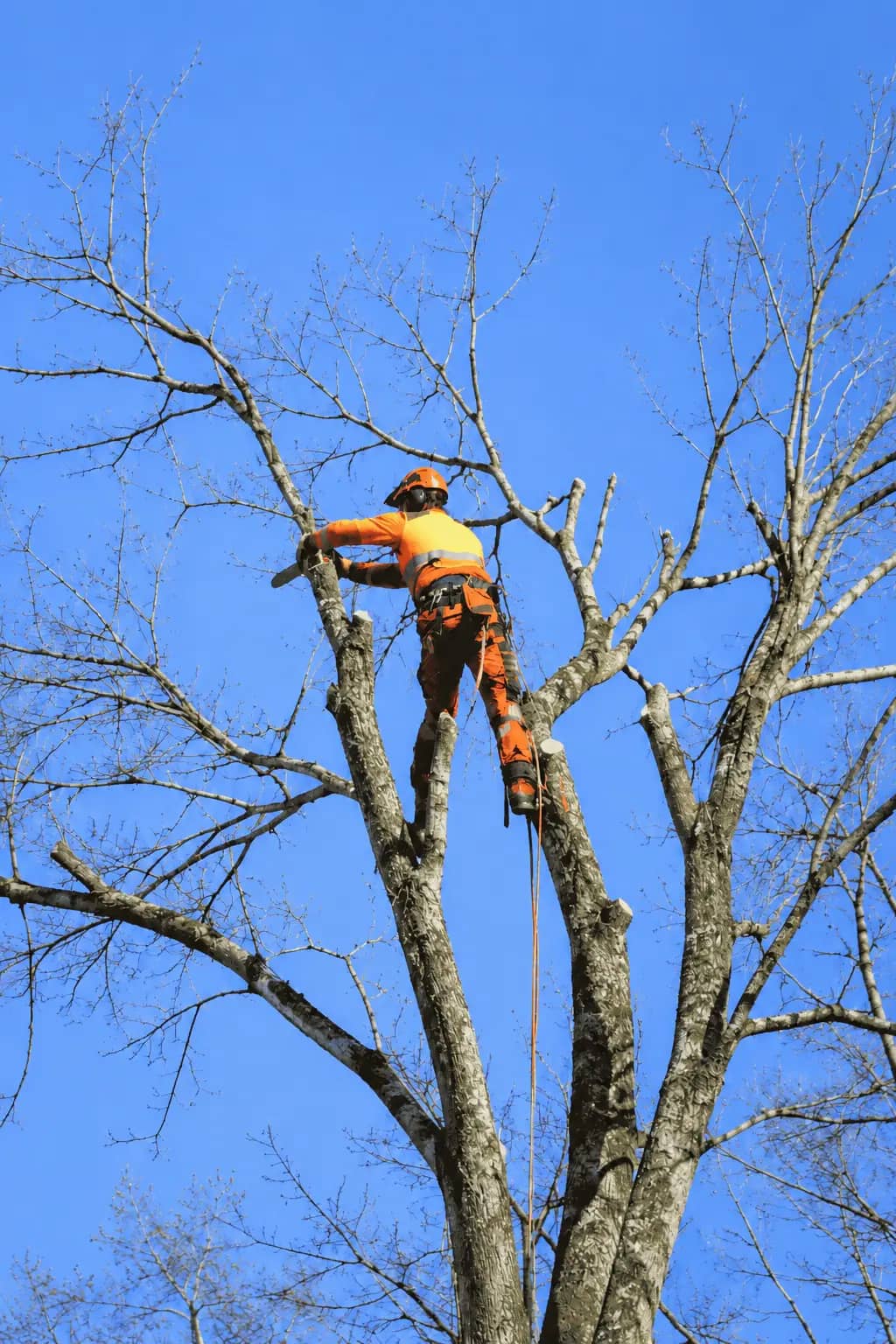
Crown cleaning is the selective removal of dead, dying, diseased, weakly attached, and crossing branches throughout the canopy. It is the most universally applicable pruning service and the correct starting point for almost every mature tree in Pittsburgh. Crown cleaning eliminates the branch wood most likely to fail during storms, removes disease and pest harborage from the canopy, and reduces the weight load on the outer portions of the crown where structural stress is highest. Every crown cleaning we perform begins with a full structural assessment by an ISA Certified Arborist, not a visual scan from the ground.
Crown Thinning
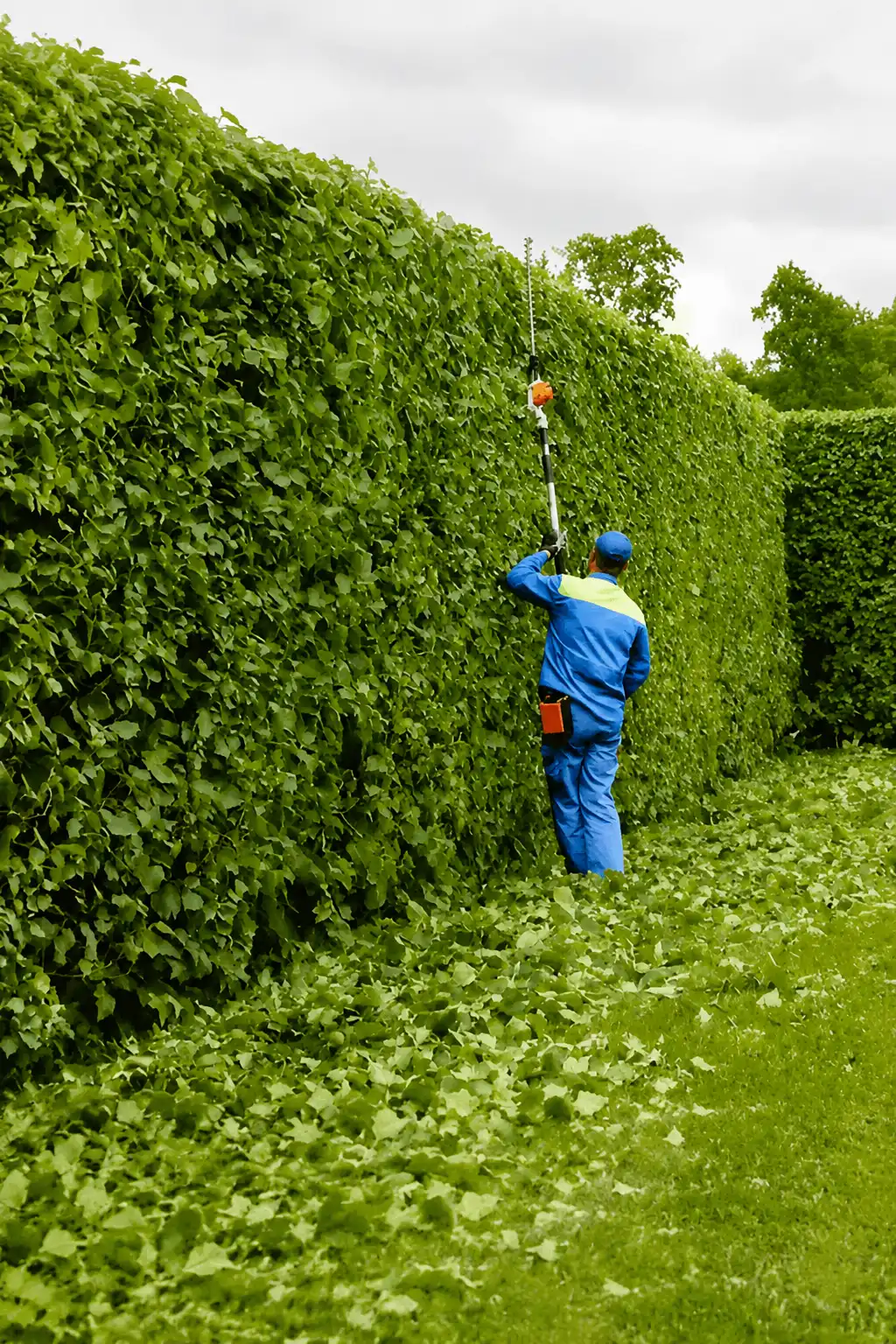
Crown thinning removes a selective proportion of live branches throughout the interior of the canopy to reduce density, improve airflow, and allow greater light penetration — without changing the overall size or shape of the tree. Proper thinning removes no more than 15–25% of the live crown in a single session. Over-thinning, a common mistake made by inexperienced operators, removes too much live crown at once, stresses the tree, and stimulates excessive water sprout growth that defeats the purpose of the work. Our arborists thin to a specific, species-appropriate canopy density calibrated for Pittsburgh's climate and the individual tree's condition.
Crown Raising
Crown raising removes the lower branches of a tree to increase clearance between the ground and the base of the canopy. This is appropriate when lower branches obstruct sightlines, interfere with pedestrian or vehicle traffic, crowd structures, or shade out turf and landscaping below the tree. We perform crown raising incrementally, raising no more than one-third of the live crown height in a single session to avoid stressing the tree and compromising root stability. For commercial properties, streetscape trees, and properties with specific clearance requirements across the Pittsburgh area, crown raising is a routine and highly practical pruning service.
Crown Reduction
Crown reduction decreases the overall height or spread of the canopy by cutting back to lateral branches large enough to sustain the remaining canopy growth. It is the technically correct way to reduce an overgrown tree that is encroaching on a structure, utility line, or neighboring property. Crown reduction is categorically different from tree topping, which cuts branches back to stubs regardless of the tree's anatomy and creates decay-prone wounds that never close properly. Our certified arborists use reduction cuts that follow the natural form of the tree, maintaining its structural integrity while achieving the size objectives required for your Pittsburgh property.
Vista Pruning
Vista pruning selectively removes or reduces specific branches to open or restore a desired view — of a landscape, a body of water, a hillside, or a city skyline — without removing the tree that creates the frame for that view. Pittsburgh's topography, with its dramatic hillsides overlooking the rivers and downtown, makes vista pruning a uniquely valuable service for homeowners in neighborhoods like Mt. Washington, Squirrel Hill, North Pittsburgh, and East Pittsburgh. Vista pruning requires precise, targeted cuts that achieve the view objective while preserving the tree's health, canopy density, and long-term structural integrity.
Fruit Tree Pruning
Fruit trees — apple, pear, cherry, and peach trees common in Pittsburgh residential gardens — require specific annual pruning to produce well, maintain an open canopy for sunlight and airflow, and manage the disease pressure that Western Pennsylvania's humid summers create. Properly pruned fruit trees produce larger, higher-quality fruit, resist diseases like fire blight and apple scab more effectively, and remain productive for decades. Our arborists prune fruit trees in late winter before bud break — the optimal window for most fruiting species in the Pittsburgh climate — using open-center or modified central leader techniques appropriate to each species.
When Proper Pruning Prevents Tree Removal in Pittsburgh?
One of the most important things an ISA Certified Arborist does is prevent unnecessary tree removal. Homeowners across Pittsburgh frequently call us expecting to be told a tree needs to come down — and leave with a pruning plan that keeps it standing for another twenty years. The trees worth saving are almost always worth the investment of professional pruning care over repeated removal and replanting cycles.
Structural pruning can correct co-dominant stems before they split. Many Pittsburgh oaks, maples, and Bradford pears develop two or more competing main stems growing at narrow attachment angles — a structural defect that will eventually split under the right load. Identified early enough, this defect can be corrected through pruning combined with cabling and bracing, avoiding the removal that would otherwise become inevitable. Our certified arborists assess every mature tree for these correctable structural issues.
Targeted disease pruning can contain an infection within a single tree. When disease is caught early and confined to specific branches or sections of the crown, precise pruning removes the infected material before it spreads to the vascular system of the main trunk. Once a disease has moved into the trunk, removal is often the only option. Pruning before that threshold saves the tree. This is why regular professional tree care — not just reactive pruning after visible damage — is the most effective form of tree preservation available.
Thinning and raising can make an at-risk tree manageable without removing it. Trees that are flagged as concerns because of their proximity to structures, utilities, or high-traffic areas can often be made safe and manageable through a combination of crown thinning, crown raising, and structural pruning — eliminating the specific risk factors without eliminating the tree. Our tree risk assessments are designed to identify the full range of options before removal is placed on the table.
Serving Pittsburgh, PA | Allegheny County & Western Pennsylvania
We provide professional tree pruning services throughout Pittsburgh, PA, Allegheny County, and Western Pennsylvania, including:
Pittsburgh neighborhoods: Squirrel Hill, Shadyside, Brookline, Mt. Washington, East Pittsburgh, Lawrenceville, Highland Park, Greenfield, Oakland, Beechview, Hazelwood, and East Liberty.
South Hills: Bethel Park, Mt. Lebanon, Upper St. Clair, Baldwin, Castle Shannon, Dormont, South Fayette Township, and Pleasant Hills.
North Hills & North Pittsburgh: Allison Park, Cranberry Township, McCandless Township, Ross Township, Gibsonia, Glenshaw, Wexford, and Mars.
West Pittsburgh & surrounding areas: Carnegie, Bridgeville, Scott Township, Collier Township, Moon Township, Coraopolis, Sewickley, McKees Rocks, Penn Hills, and Wilkinsburg.
We serve all of Allegheny County and extend into Butler, Washington, Beaver, and Westmoreland counties. Call us to confirm service to your specific community in the Greater Pittsburgh area.
Frequently Asked Questions — Tree Pruning Pittsburgh, PA
What is the difference between tree pruning and tree trimming?
Tree pruning refers specifically to the intentional removal of branches to improve a tree's structure, health, safety, or longevity — guided by an understanding of tree biology and arboricultural standards. Tree trimming more broadly describes shaping and size control work focused on appearance and space management. In practice, professional tree care combines both, but the distinction matters when choosing who to hire: pruning should always be performed by a trained arborist who understands how trees respond biologically to cuts, not just someone with cutting equipment.
How much does tree pruning cost in Pittsburgh, PA?
Tree pruning cost in Pittsburgh depends on tree size, species, canopy complexity, number of trees, equipment required, and the scope of work needed. Small ornamental trees or young structural pruning visits typically cost $150–$400. Established mid-size trees run $400–$800. Large mature trees with complex canopies or those requiring bucket truck or aerial access generally range from $800–$2,000. We provide free, written estimates for every pruning job before any work begins — no pressure, no surprises.
How do I know if my tree needs pruning or removal?
Many trees that appear to need removal actually need pruning — and a professional assessment is the only reliable way to know. Warning signs that pruning may solve the problem include: dead branches confined to the outer canopy, minor disease limited to specific limbs, overextended growth encroaching on a structure, and structural imbalance in a young to mid-age tree. Warning signs that removal may be necessary include: extensive internal trunk decay, a heavily compromised root system, disease that has reached the main stem, or structural failure that cannot be corrected safely. Our ISA Certified Arborists assess every tree honestly and give you a clear recommendation based on the actual condition of your tree.
What pests and diseases most commonly affect Pittsburgh trees, and can pruning help?
Western Pennsylvania trees face several significant threats. Bagworms defoliate ornamental and evergreen trees when populations go unchecked. Hemlock Woolly Adelgid threatens Eastern hemlock across the Pittsburgh area. Emerald Ash Borer has eliminated ash trees across Allegheny County and continues to be a management challenge. Various fungal diseases — including Oak Wilt, fire blight on fruit trees, and apple scab — spread through wounds and stressed wood. Timely, properly executed pruning removes infected and infested branches, improves canopy airflow that reduces fungal pressure, and gives our arborists an opportunity to spot pest and disease issues early — when intervention is still effective. Annual or biannual professional tree pruning is the best early-detection system available for Pittsburgh property owners.
Is it safe to prune large trees myself?
Working at height in a tree with cutting equipment is one of the most dangerous activities a homeowner can attempt. The Consumer Product Safety Commission consistently ranks chainsaw use and tree-related falls among the highest-risk home tasks in terms of serious injury and fatality. Beyond the personal safety risks, incorrect pruning cuts — cuts outside the branch collar, stub cuts, or flush cuts — cause permanent damage to trees that a professional would never inflict. For any branch work above ground level, or any branch larger than two inches in diameter, we strongly recommend hiring an ISA Certified Arborist. The cost of professional tree pruning in Pittsburgh is a fraction of the cost of treating a serious injury or correcting years of pruning damage.
Get a Free Tree Pruning Estimate in Pittsburgh Today
Whether your trees need routine crown cleaning, targeted disease pruning, structural work on a developing tree, or a full professional arborist assessment to determine the right course of care — our Pittsburgh pruning team is ready to help. We bring ISA Certified Arborist expertise, species-specific technique, and a genuine commitment to tree preservation to every job across Pittsburgh, PA and the Greater Pittsburgh area.
Contact us today for a free, no-obligation pruning estimate. We serve all of Pittsburgh, Allegheny County, and Western Pennsylvania — with professional tree care that protects your trees and your property for the long term.
Call (412) 501-2233 — Free Estimates, ISA Certified Arborists
Licensed, Bonded & Insured
ISA Certified Arborists
Pittsburgh, PA | Allegheny County | Greater Pittsburgh | Western Pennsylvania
Fast Response — We Reply in Under 2 Hours
Get Your Free Estimate Today
Your information is 100% safe and never shared.