
Emergency Tree Service
Emergency Tree Service Pittsburgh, PA — 24/7 Response to Fallen Trees, Storm Damage & Hazardous Trees
Available 24 Hours a Day / 7 Days a Week / 365 Days a Year We dispatch crews immediately across Pittsburgh & Allegheny County. Most locations reached within 1–2 hours.
Licensed, Bonded & Insured.
ISA Certified Arborists.
24/7/365 Dispatch .
Cranes & Full Equipment On-Call.
A tree through your roof. A fallen oak blocking your driveway. A massive split limb hanging over your car after a storm. These are not situations where you schedule an appointment for next week. When a tree emergency threatens your property, your family, or your access to the road, you need a professional crew on site — fast.
We are Pittsburgh's 24/7 emergency tree service, dispatching ISA Certified Arborists and fully equipped crews across Pittsburgh, Allegheny County, and Western Pennsylvania every hour of every day. We do not use an answering service at night. We answer, we assess, and we dispatch — because tree emergencies do not follow business hours, and neither do we.
Tree Emergencies We Respond to in Pittsburgh, PA
Tree Fallen on Your House, Roof, or Structure
A tree on your roof is the most urgent tree emergency a Pittsburgh homeowner can face. Every moment the tree remains on the structure, it adds weight, causes additional structural stress, and risks deeper penetration through the roof deck and interior framing. Our emergency crews prioritize structural stabilization first — sectioning the tree systematically from the top down to relieve weight before moving the main load — to prevent the removal process itself from causing additional damage. We document the scene thoroughly from arrival for your homeowners insurance claim and work as efficiently as possible to get your home secured.
Tree Down on Power Lines
A tree or large branch resting on power lines is a life-threatening emergency. Do not touch the tree, the lines, or anything in contact with them. Keep everyone clear of the area — downed lines may still be energized even when they appear inactive. Call 911 and your utility company immediately so they can de-energize the line. Once the utility company confirms the line is safe, our emergency tree service team removes the tree from the de-energized line and clears the scene completely. We work with homeowners, utility contractors, and municipal crews across the Pittsburgh area to coordinate safe, efficient line-clearance operations.
Fallen Tree Blocking Your Driveway or Road
A fallen tree blocking your driveway traps your vehicles, cuts off emergency vehicle access to your home, and — if it spans a road — creates a public safety hazard. Our Pittsburgh emergency tree removal crews cut through and clear fallen trees from driveways, private roads, and access paths quickly, sectioning the trunk into manageable pieces, chipping branches on site, and restoring access as the first priority. Full debris cleanup and haul-away follows once the path is cleared.
Hanging Limbs and Widow-Maker Branches
A large branch that has partially broken but is still attached to the tree — what arborists call a widow-maker — is arguably more dangerous than a branch that has already fallen, because it can drop unpredictably with no warning. Wind, vibration, or temperature changes can trigger release at any moment. If you have a significant hanging limb over your home, driveway, deck, play area, or vehicle in Pittsburgh, treat it as a priority emergency and call us before it decides to fall on its own terms.
Storm-Damaged and Split Trees
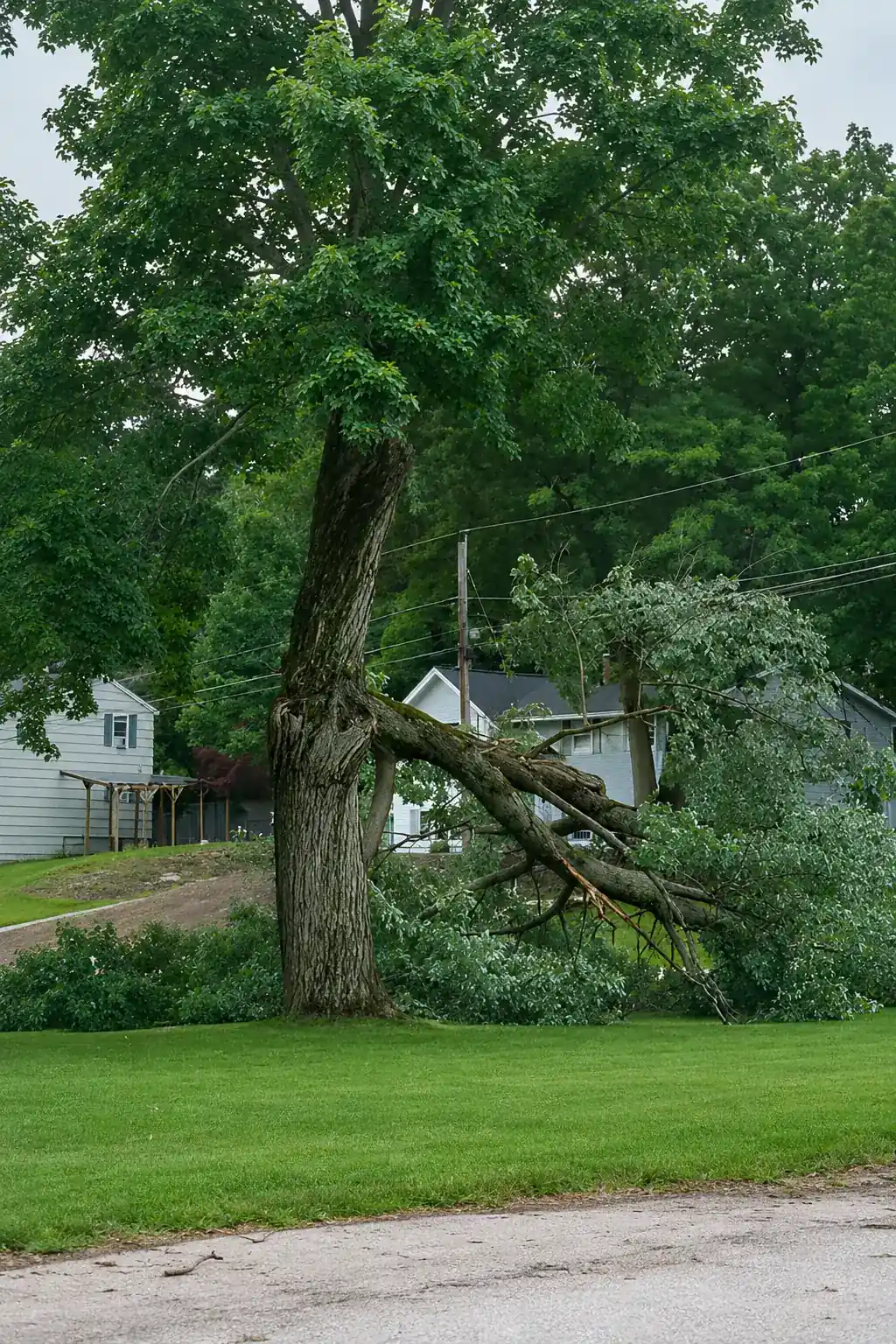
Pittsburgh's severe spring thunderstorms and ice storms routinely crack main stems, split co-dominant trunks, and tear off major scaffold branches, leaving trees that are structurally compromised but still standing. These damaged trees need an immediate professional assessment — not to determine whether they are pretty, but whether they are stable enough to wait for a scheduled appointment or require same-day emergency attention. Our certified arborists can assess a storm-damaged tree quickly and give you an honest answer about the urgency and the safest path forward.
Dead Trees at Risk of Imminent Collapse
A dead tree that has been standing for one or two seasons is not a tree that can wait indefinitely. As internal wood decay advances, root systems deteriorate, and the structural integrity of the trunk diminishes, the window for a controlled, planned removal closes — and the risk of sudden collapse increases. Dead trees near homes, driveways, and high-traffic areas across Pittsburgh and Allegheny County are priority hazards. If you have a dead tree near anything you care about protecting, call us for an emergency assessment before it becomes an uncontrolled event.
Hazardous Trees Leaning After Root Failure
A tree that was standing straight before a storm but is now leaning — even slightly — has likely experienced root failure or significant soil movement at the root plate. This is a structural emergency. A leaning tree does not typically return to its prior condition on its own, and without intervention it will continue to lean until it falls. The direction and speed of continued failure can be difficult to predict. Our ISA Certified Arborists assess leaning trees on arrival to determine whether immediate removal or emergency stabilization is the appropriate response, based on soil conditions, lean angle, root plate exposure, and proximity to structures.
How Our Emergency Tree Service Pittsburgh Works
When you call our Pittsburgh emergency tree service line, this is exactly what happens.
You reach a live person immediately — not a voicemail, not an answering service. We take your call, ask the right questions to understand the situation, and dispatch a crew. Most locations throughout Pittsburgh and Allegheny County can be reached within one to two hours depending on weather conditions, storm volume, and road access. During major storm events with widespread tree emergencies across the Pittsburgh area, we prioritize by hazard severity — active structural damage to homes first, blocked access second, standing hazard trees third.
Our crew arrives with the right equipment for your specific emergency. We carry chainsaws, rigging systems, aerial equipment, and crane capability for situations requiring sectional removal over structures or vehicles. We assess the scene on arrival, stabilize any active danger immediately, and develop a removal plan that protects your property throughout the work. We do not rush steps that require precision.
After the emergency removal is complete, we perform full debris cleanup — chipping branches, clearing wood sections, and raking the area before we leave. We can provide written documentation of the damage and our work scope for your homeowners insurance claim, which saves significant time and administrative back-and-forth with your adjuster. If additional damaged or hazardous trees remain on your property after the primary emergency is addressed, we assess and advise on those during the same visit rather than leaving a partial job behind.
Pittsburgh's Storm Season & Tree Emergencies — What to Expect
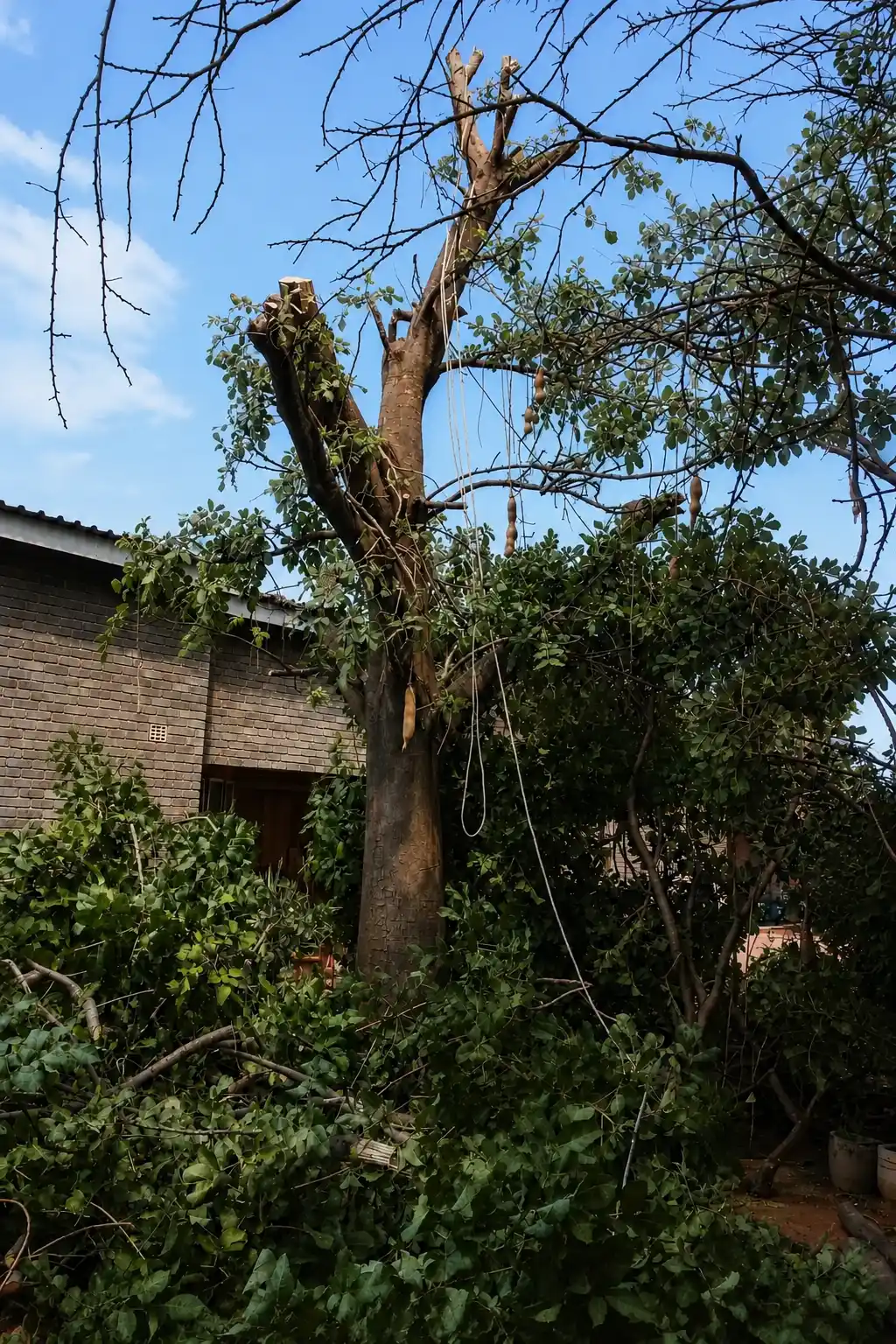
Pittsburgh's geography and climate create a consistent pattern of tree emergency risk throughout the year. Understanding the seasonal cycle helps property owners know when to be most vigilant and when to schedule proactive assessments before emergencies develop.
Spring is Pittsburgh's highest-risk tree emergency season. Severe thunderstorm systems sweep through Western Pennsylvania repeatedly from April through June, bringing damaging straight-line winds, large hail, and intense lightning that splits trees, snaps large branches, and uproots root systems saturated from spring rainfall. Trees that have internal decay, compromised root systems, or unresolved structural defects from winter are most vulnerable. The volume of emergency tree service calls in Pittsburgh spikes sharply during this window, and response times across all providers extend during simultaneous multi-storm events.
Summer brings extended storm exposure and heat stress. July and August thunderstorms continue producing tree emergencies across the Pittsburgh area, while extended heat and drought stress weakens trees that were already compromised from spring storms. Trees that survived spring damage without professional assessment may fail during the summer season under a fraction of the load that originally damaged them.
Winter ice loading is Pittsburgh's most underestimated tree hazard. Ice storms encrust branches in weight they were never designed to carry, snapping scaffold limbs from otherwise-healthy trees and overloading root systems already frozen into saturated soil. An ice storm that deposits even a quarter-inch of ice across a mature oak's canopy can multiply the weight load by hundreds of pounds. Our 24/7 emergency tree service responds to winter storm events across Pittsburgh and Allegheny County just as it does to spring and summer storms — no season off.
Fall is the best time to prevent the next emergency. After storm season and before winter, late September through November is the optimal window for professional tree risk assessments across your Pittsburgh property. Trees that showed storm damage, new leans, dropped major branches, or unusual canopy changes during the prior season should be professionally assessed before winter loading and the following spring storm cycle repeat the cycle with a weakened tree.
Does Homeowners Insurance Cover Emergency Tree Removal in Pittsburgh?
This is one of the most common questions Pittsburgh homeowners ask in the aftermath of a tree emergency — and the answer depends on specific circumstances most standard policies treat differently.
When a tree falls on your house, garage, fence, or other covered structure, most standard homeowners insurance policies cover the cost of removing the tree from the structure and repairing the damage to the structure, subject to your deductible. The debris removal provision typically covers $500–$1,000 per tree, with limits varying by policy. The key condition is that the tree must have caused actual physical damage to a covered structure — not simply fallen in the yard.
When a tree falls in your yard without hitting a structure, standard policies generally do not cover removal costs unless the fallen tree is blocking a specific named access point — a driveway or ramp required for a wheelchair, for example. A tree that fell cleanly into your grass, even at great inconvenience, typically falls outside standard debris removal coverage. You pay out of pocket.
When your neighbor's tree falls on your property, your own insurance policy — not your neighbor's — typically covers the damage to your property, unless you can demonstrate negligence on your neighbor's part (for example, they were notified in writing that the tree was dead or hazardous and failed to act). Document this kind of prior notification carefully.
What helps your claim in every case: professional documentation. Our emergency crews provide written scope documentation on every job that includes the date, time, damage description, work performed, and photographic record — information your adjuster needs to process your claim efficiently. Request this documentation when you call us, and we will ensure it is thorough and complete.
What to Do Right Now If a Tree Has Fallen on Your Pittsburgh Property
Get everyone clear of the tree and any downed lines. Move all people and pets away from the fallen tree immediately. If any power lines are involved, do not go near them for any reason. Call 911 and your utility company before calling anyone else.
If the tree is on your home, do not enter the structure until a professional has assessed it. A tree on a roof changes the structural load on the building below in ways that are not always visible from outside. Wait for clearance.
Call our Pittsburgh emergency tree service line immediately at (412) 501-2233. Give us your address, a brief description of what has happened, and whether there are any power lines involved. We dispatch from there.
Document the damage before any work begins. Take photographs of the fallen tree, the damage it caused, and the surrounding area. This documentation is essential for your homeowners insurance claim. Do not move or remove anything before photographing it.
Contact your homeowners insurance company to open a claim. Let them know emergency tree removal is underway or has been arranged. Ask your adjuster what documentation they need from the tree service to process your claim efficiently.
Stay clear of the work area while our crew operates. Emergency tree removal involves heavy equipment, falling wood sections, and fast-moving operations. Give our crew clear access and a safe perimeter.
Serving Pittsburgh, PA | Allegheny County | 24/7 Emergency Response
Our 24/7 emergency tree service covers all of Pittsburgh, PA and the Greater Pittsburgh area, including:
Pittsburgh neighborhoods: Squirrel Hill, Shadyside, Brookline, Mt. Washington, Lawrenceville, Highland Park, Oakland, Greenfield, Beechview, Hazelwood, East Liberty, and South Side.
South Hills: Bethel Park, Mt. Lebanon, Upper St. Clair, Baldwin, Castle Shannon, Dormont, Greentree, South Fayette Township, Nevillewood, and Pleasant Hills.
North Hills & North Pittsburgh: Allison Park, Cranberry Township, McCandless Township, Ross Township, West View, Avalon, Gibsonia, Glenshaw, Wexford, and Mars.
West Pittsburgh: Carnegie, Bridgeville, Scott Township, Collier Township, Robinson Township, Moon Township, Coraopolis, Sewickley, McKees Rocks, North Fayette, and Imperial.
East & surrounding: Cheswick, Gibsonia, Saxonburg, Delmont, Ford City, and communities throughout Allegheny County, Butler County, and Western Pennsylvania.
Storm event coverage extends further. During major storm events affecting multiple Pittsburgh-area communities simultaneously, we extend our emergency service areas and coordinate with additional resources to reach as many affected properties as possible. Call regardless of your location — if we cannot reach you, we will tell you honestly and help point you in the right direction.
Frequently Asked Questions — Emergency Tree Service Pittsburgh, PA
How quickly can you respond to a tree emergency in Pittsburgh?
We dispatch immediately upon receiving your call. Under normal conditions, most Pittsburgh and Allegheny County locations can be reached within one to two hours. During active storm events with widespread tree emergencies across Pittsburgh's service area, response times extend based on call volume and crew availability. We prioritize by severity — trees actively on structures or posing imminent danger to people first. When you call, be specific about what is happening so we can assign the right priority level to your situation.
Do you respond to tree emergencies during active storms?
Yes, with conditions. If lightning is active or winds are at a level that creates immediate risk to our crews, we stage nearby and deploy as soon as conditions allow safe operations. We do not send crews into actively dangerous conditions — that would create more emergencies, not fewer. In most Pittsburgh storm events, this delay is measured in minutes, not hours. As soon as conditions permit safe work, we begin.
Is emergency tree removal more expensive than regular tree removal?
Yes. Emergency tree removal in Pittsburgh carries a premium above standard tree removal pricing due to after-hours dispatch, expedited response, hazard conditions, and the complexity of urgent removals on or near structures. Emergency situations typically run 25–50% above standard pricing for comparable work during regular hours. We provide a clear estimate before work begins whenever circumstances allow, and always document the scope of work thoroughly for insurance purposes.
What if my neighbor's tree fell on my property?
Your own homeowners insurance policy — not your neighbor's — is typically the first point of contact for damage to your property from a neighboring tree. Document the fallen tree's origin clearly before any work begins. If your neighbor had been previously notified in writing that their tree was dead or hazardous and failed to act, that creates a potential negligence case where their liability coverage may apply. Consult your insurance company and if necessary an attorney on that question. What we can do immediately is remove the tree and provide complete documentation for your claim.
Can you help with post-storm cleanup after the emergency tree is removed?
Yes. Once the immediate emergency tree removal is complete, we offer full storm cleanup service — removing scattered limbs, branches, and debris from your property, chipping material on site, and performing a walk of the remaining trees for any additional damage or hazardous trees that need attention. Pittsburgh storm systems frequently damage multiple trees simultaneously, and a thorough post-storm assessment protects you from a second emergency from a tree you did not notice in the immediate aftermath.
Call Pittsburgh's 24/7 Emergency Tree Service Now
Do not wait with a tree emergency. The longer a damaged or fallen tree remains unaddressed, the greater the risk to your property, your family, and the people around your Pittsburgh home or business. Our emergency crew is on call right now — licensed, insured, ISA Certified, and fully equipped to handle whatever the storm left behind.
Call (412) 501-2233 — We Answer 24/7/365
Licensed, Bonded & Insured
ISA Certified Arborists
24/7/365 Emergency Response
Pittsburgh, PA | Allegheny County | Greater Pittsburgh
Fast Response — We Reply in Under 2 Hours
Get Your Free Estimate Today
Your information is 100% safe and never shared.